
छह घरों का एक नल
One Tap for Six Homes
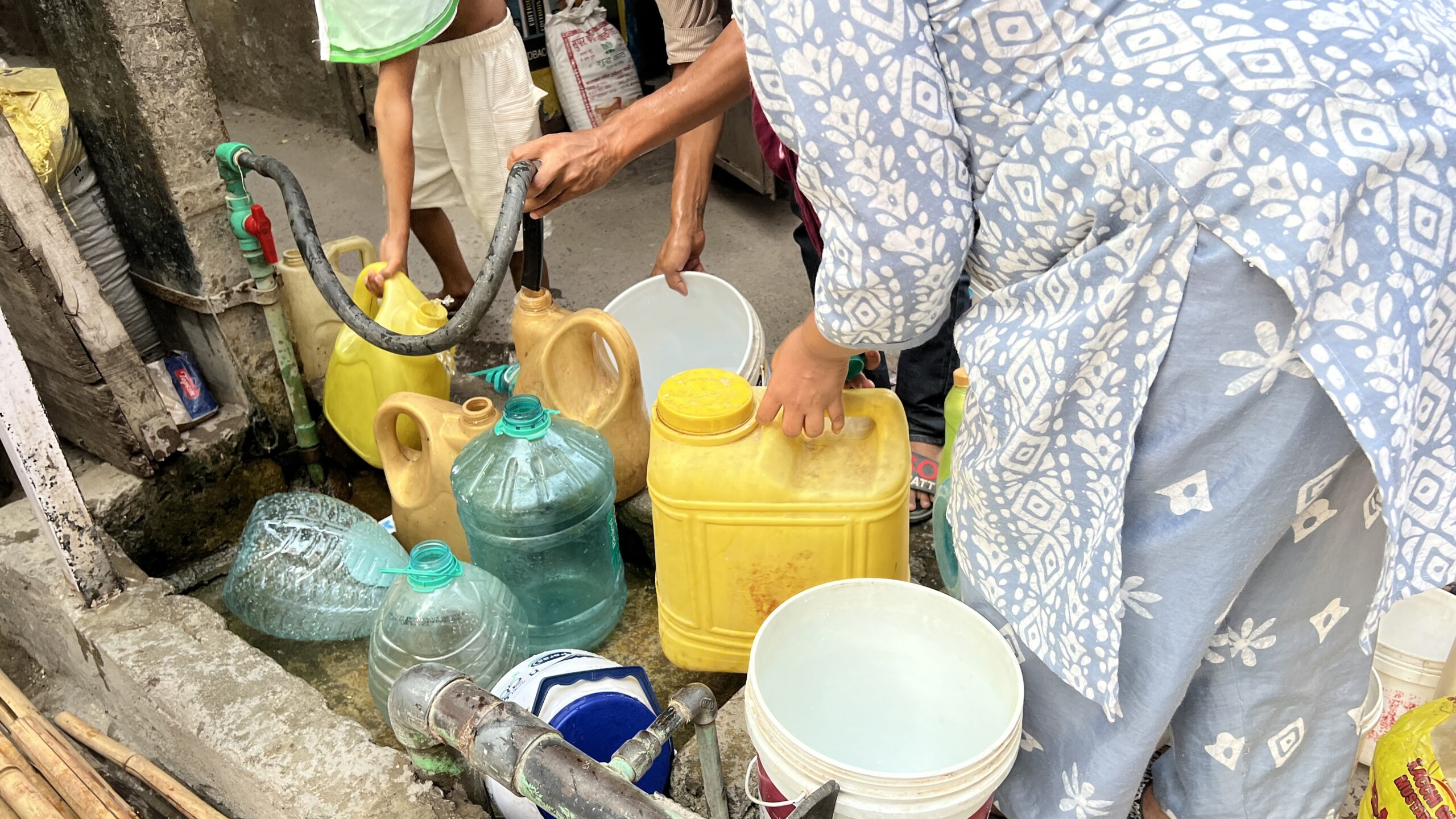
सुभाष कैंप में छह परिवारों ने आपस में सात-सात हजार रुपए मिलाकर बाहर की लाइन से पानी का एक कनेक्शन लिया है। सबने मिलकर यह भी तय किया कि हरेक परिवार को पानी भरने के लिए बीस-बीस मिनट मिला करेंगे। दिलचस्प बात ये है कि नल में पानी सरकारी व्यवस्था से आता है, लेकिन इसे सरकारी नल नहीं कहा जा सकता। इसके बारे में यह कहना भी मुश्किल है कि यह प्राइवेट है या सामूहिक।
In Subhash Camp, six families have contributed seven thousand rupees each to get one water connection from the main water pipeline. Together they have also decided that each family will get twenty minutes every day to fill up their water containers. The interesting aspect is that the water in the tap comes through the government system, and yet it cannot really be called a government pipeline. It is hard to say, too, whether it is private or collective.
सुभाष कैंप की इस कच्ची बस्ती में क़रीब तेरह-सौ झुग्गियाँ हैं। पानी की किल्लत यहाँ की स्थायी समस्या है— कभी-कभी तो गर्मियों में यहाँ दो–दो हफ़्तों तक पानी के दर्शन नहीं होते। ऐसे दिनों में लोगों को पानी भरने के लिए या तो बस्ती में ही किसी के घर के आगे खड़ा होना पड़ता है या फिर बस्ती के बाहर स्थित धोबीघाट से भरकर लाना पड़ता है।
This neighbourhood with one thousand three hundred jhuggies is called Subhash camp. An inconsistent water supply is a permanent problem here. At times, especially during the summer months, water isn’t available for up to two weeks at a time. On such days, people have to either stand in line in front of someone’s house within the settlement, or go and fill water from the dhobhi ghat located outside the settlement.
चूँकि यहाँ पानी की किल्लत है तो यहाँ हमेशा पानी की बात ही चलती रहती है। जानकी की गली में भी यही क़िस्सा चलता रहता है। उसकी गली के कई घरों में पानी का कोई कनेक्शन नहीं है।
As there is an acute shortage of water in Subhash camp, therefore that is the subject of constant discussions amongst people. Janaki’s lane is no different from the others in this matter. Many homes in her lane don’t have a water connection of their own.
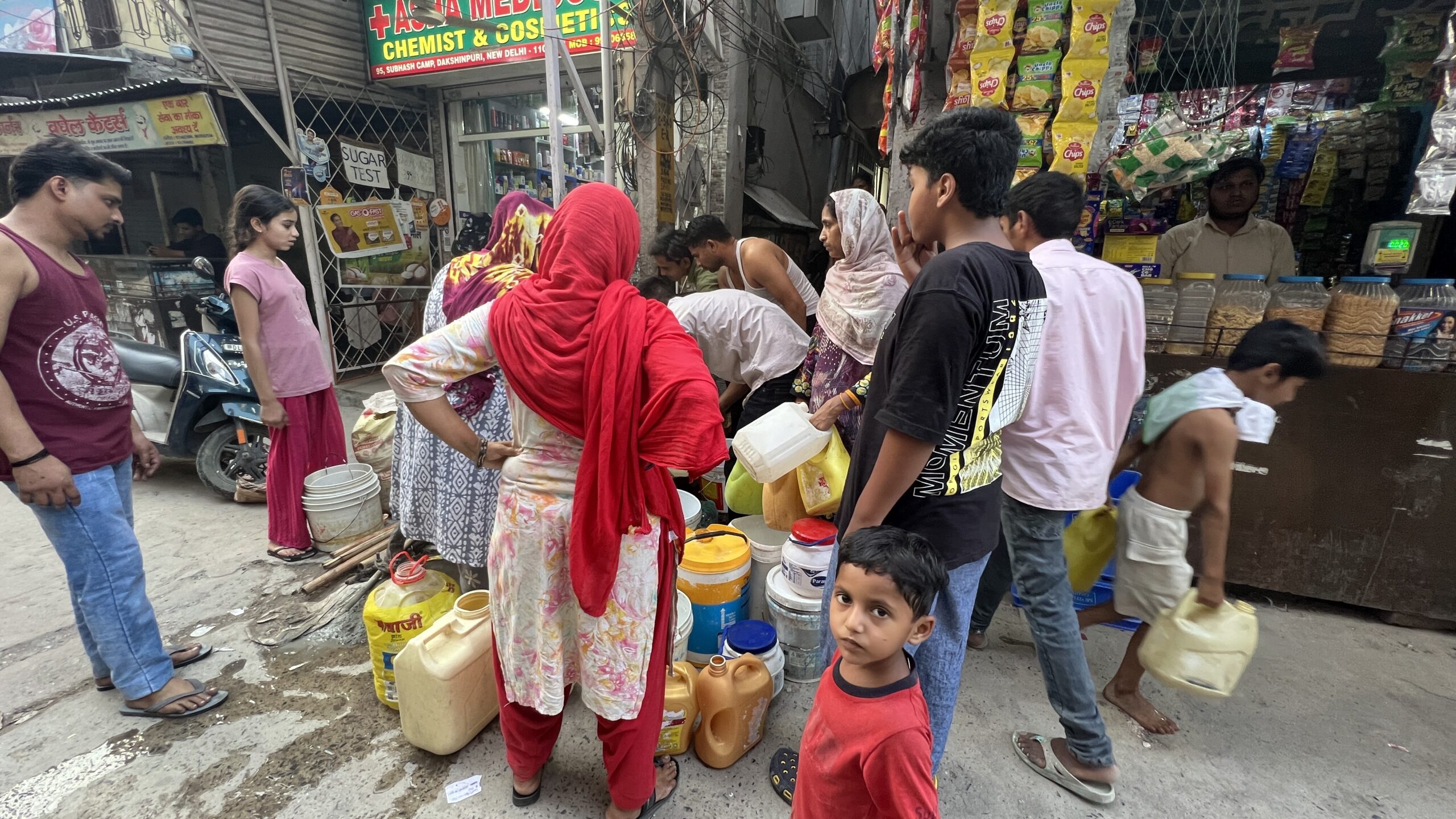
कई घरों में, कभी-कभी पूरी गली में पानी का एक ही कनेक्शन होता है। सुभाष कैंप, दक्षिणपुरी। गर्मी, 2026।
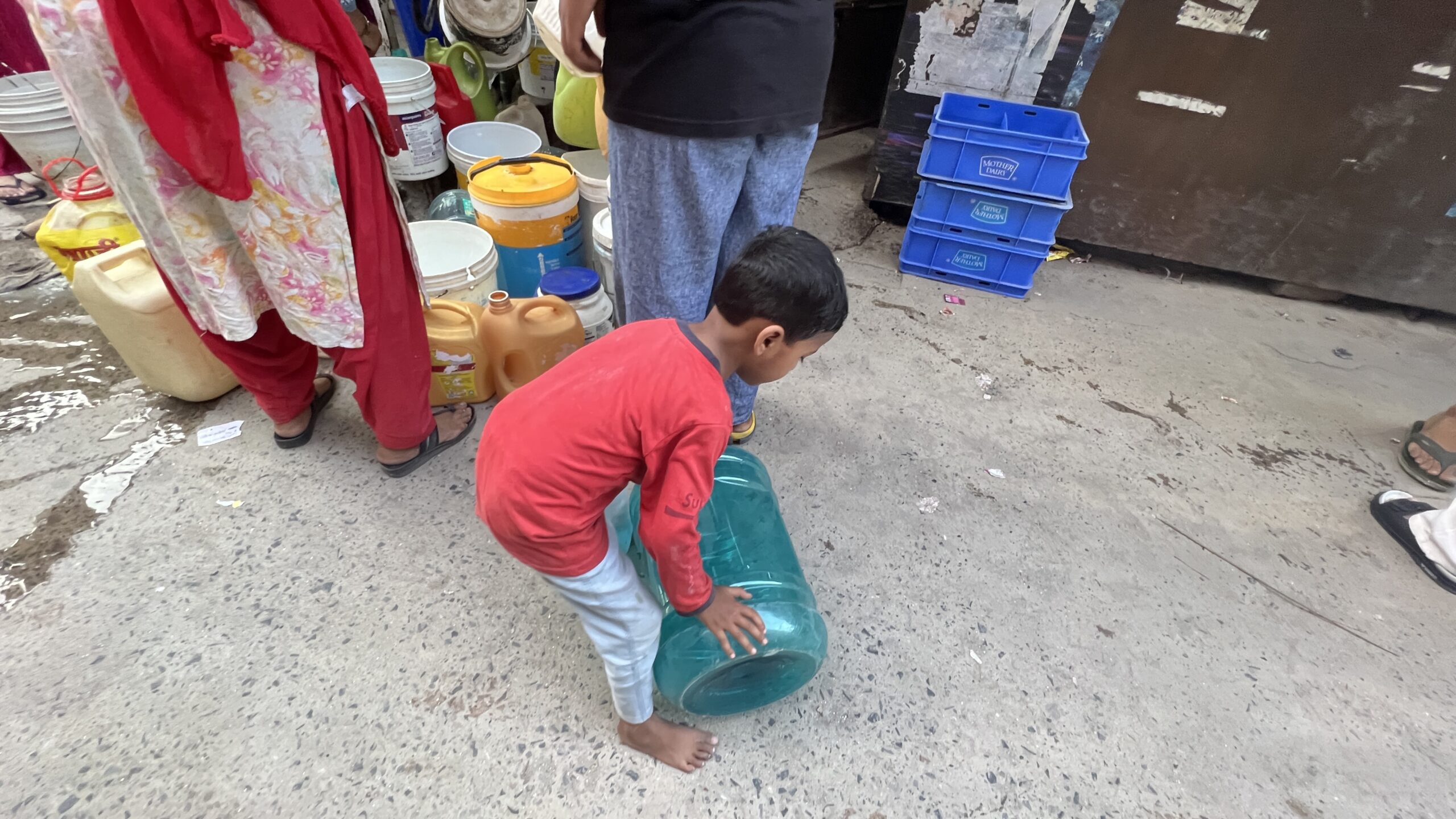
पानी भरने के काम में बच्चे भी मदद करते हैं। सुभाष कैंप, दक्षिणपुरी। गर्मी, 2026।
एक दिन जब जानकी अपने काम से लौट रही थी तो गली में घुसते ही उसके कानों में औरतों की यह बात पड़ी: आख़िर, हम लोग कब तक पानी के पीछे भटकते रहेंगे। अब तो हमें भी पैसे मिलाकर बाहर से कनेक्शन ले लेना चाहिए।
One day as Janki was returning from work, she overheard some women speaking: Afterall for how long will keep wandering around because of water. We should think about collecting some money together and getting a connection of our own.
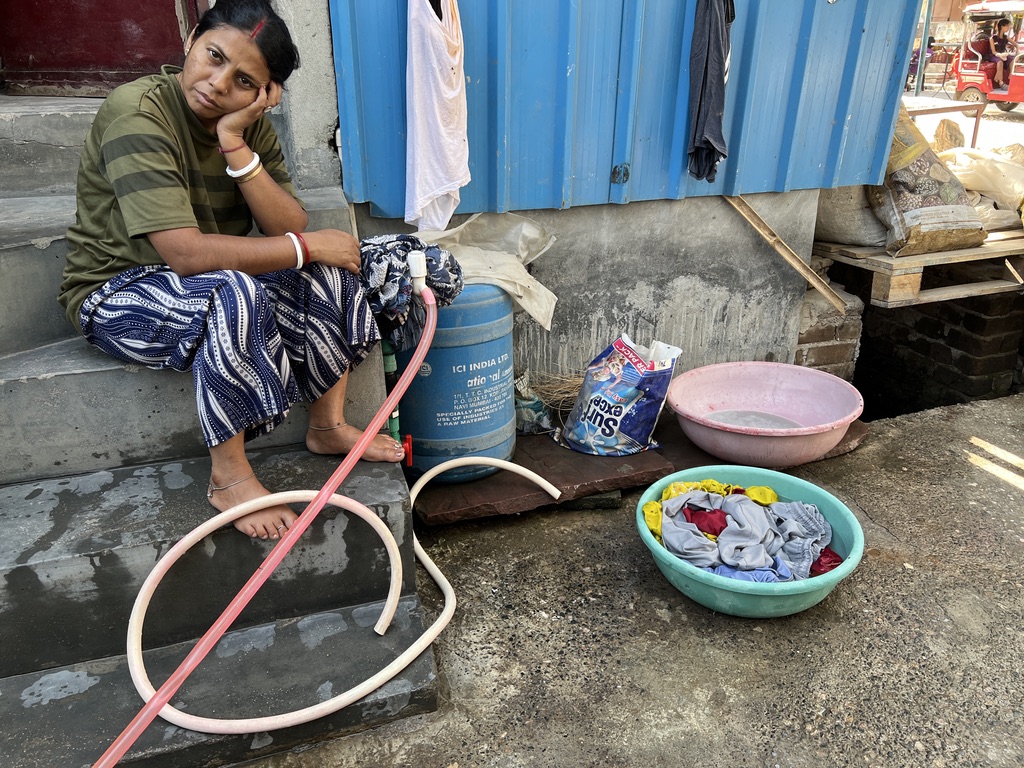
यहाँ उस कनेक्शन की बात हो रही थी जिसका बस्ती के लोग आपस में पैसे जोड़कर जुगाड़ किया करते है। कहने को ऐसे कनेक्शन ग़ैर-सरकारी और ग़ैर-क़ानूनी होते हैं लेकिन बहुत-से घरों में पानी पहुँचने का यही एक अकेला ज़रिया है।
The women were discussing the kind of connection that people in the settlement arrange among themselves by pooling money. To tell you the truth, such connections are illegal but for many homes, this remains the only option for bringing water to them.
उनकी बातों पर सोचते-विचारते जानकी घर आ पहुँची। बाक़ी लोगों ने कहीं न कहीं से ब्याज पर पैसा उठा लिया था। जानकी ने भी धोबीघाट के मालिक से बात की और पंद्रह सौ रुपये की क़िस्त पर पैसे उठा लिए। पैसा मिलने के बाद उसके दिल से एक बड़ा बोझ उतर गया। उधार के इन दस हजार रुपयों में सात हजार पानी के कनेक्शन, दो हजार की पानी की एक छोटी और सेकेंड हैंड मोटर, ढाई सौ रुपये के प्लास्टिक के पाँच–पाँच लीटर वाले पाँच डिब्बों, साढ़े तीन सौ रुपये बीस लीटर के ड्रम और पाँच सौ रुपये दस मीटर लंबे एक पाइप की भेंट चढ़ गए।
Turning their words over in her mind, Janaki reached her home. Most of the women had picked up loans for this. So, Janaki also spoke with the owner of the dhobi ghat and borrowed money on a monthly instalment of fifteen hundred for a year. Once she had the money in hand, it seemed like a great weight had been lifted from her heart. Out of the ten thousand rupees she had borrowed, seven was for the water connection, two thousand was for a small second-hand motor, two hundred and fifty for five, five litre capacity plastic water storing jars, three hundred and fifty rupees for a twenty litre water drum and five hundred for a ten-meter-long pipe.
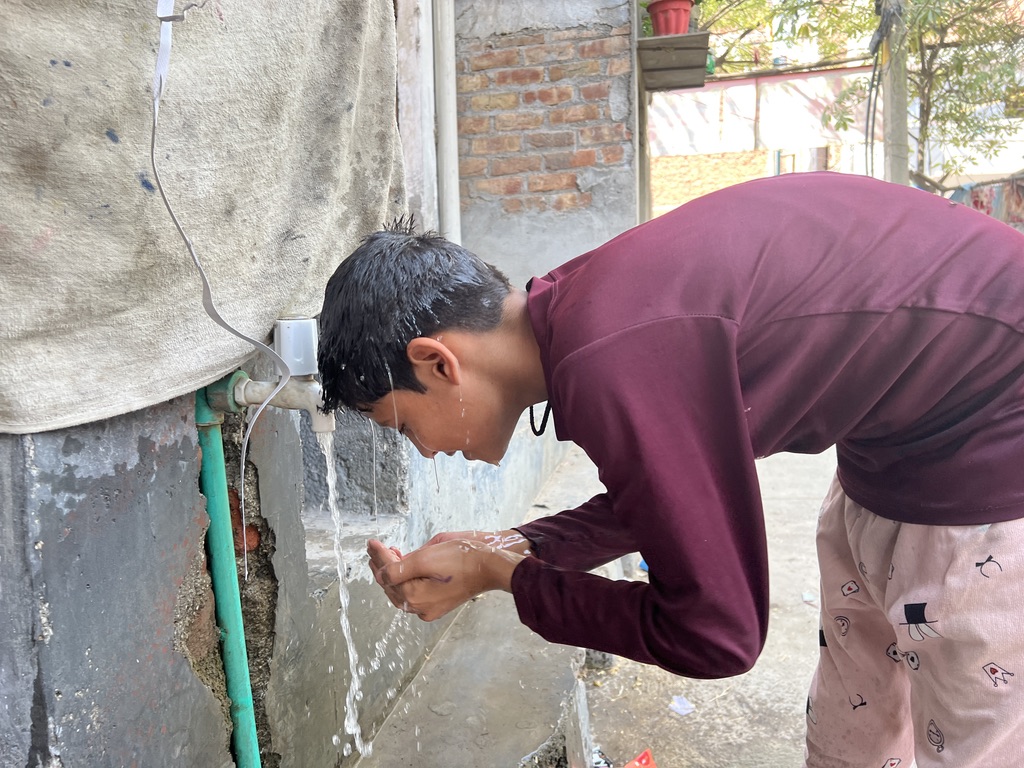
ख़ैर, छह परिवारों ने कनेक्शन तो ले लिया था लेकिन पानी उनसे अभी भी आँख-मिचौनी खेल रहा था। नल का दर्शन करते हुए दो दिन बीत चुके थे। आज पानी आने का दिन था। दोपहर के एक बजे छह के छह परिवार नल के सामने खड़े थे। हर किसी को पहली बूंद का इंतज़ार था। अचानक नल में घरघराहट हुई जैसे घर का कोई बुजुर्ग खाँस रहा हो। इसके बाद जैसे ही पानी बाहर निकला तो सबके चेहरों पर ख़ुशी दौड़ गई। बच्चों ने उसका स्वागत कुछ ऐसे किया जैसे घंटो से गुल बिजली अचानक लौट आई हो।
In this manner the six families had got together and taken one water connection. However, water was still playing hide and seek with them. They had just been gazing at a dry water tap for two days now. It was scheduled that water would come in the main pipe today. At one in the afternoon, members of all six families were standing in front of it. Every eye was waiting for the first drop of water. Suddenly the tap gave a rattling sound, as if an old person was coughing inside the pipe. Every face broke into a smile as water flowed out of the tap. The children greeted the water flow in the same way they celebrated the sudden return of electricity after hours of a power cut.